


KINETIKA Meets in Lisbon: Bringing Dynamic Heritage Stories into the Digital Twin
Lisbon, Portugal | 3–4 September 2026
The EU-funded KINETIKA project held its 2nd General Assembly in Lisbon, hosted by Lisbon City Council (Câmara Municipal de Lisboa – CML) and CARRIS, bringing partners together to review progress, coordinate the next stages of implementation and connect the project’s technological development more closely with the five cultural heritage pilot cases at the heart of KINETIKA.
The meeting reflected an important step in the project’s evolution: from the initial definition of architectures, tools and implementation plans towards a more integrated phase in which technologies, pilot needs and real-world heritage conditions increasingly come together. Discussions focused not only on what each technical component can deliver, but also on how these components can interact meaningfully around the cultural heritage assets themselves.
A dedicated demonstration of the evolving KINETIKA integrated platform provided a shared reference point for this process, illustrating how documentation, historical information, monitoring data and future analytical and simulation services can progressively converge within one digital environment. Rather than representing a formal project milestone, the demonstration marked a tangible step towards the integrated KINETIKA ecosystem envisioned by the consortium.
The General Assembly also placed strong emphasis on the stories behind KINETIKA’s five pilots: the Cathedral bells of Salamanca, the historic Enaerios cableway in Naxos, the Santa Justa Elevator in Lisbon, historic castle sites in Austria, and the Pyhäsalmi Mine Hoist Tower in Finland.
Despite their very different scale, material and function, the pilots raise common questions: how can we document change over time, understand movement and deterioration, combine technical evidence with historical knowledge, and support future conservation without losing the human meaning attached to these places and objects?
From technical development to shared implementation, the Lisbon meeting helped frame the next phase around the realities of the pilot heritage assets.
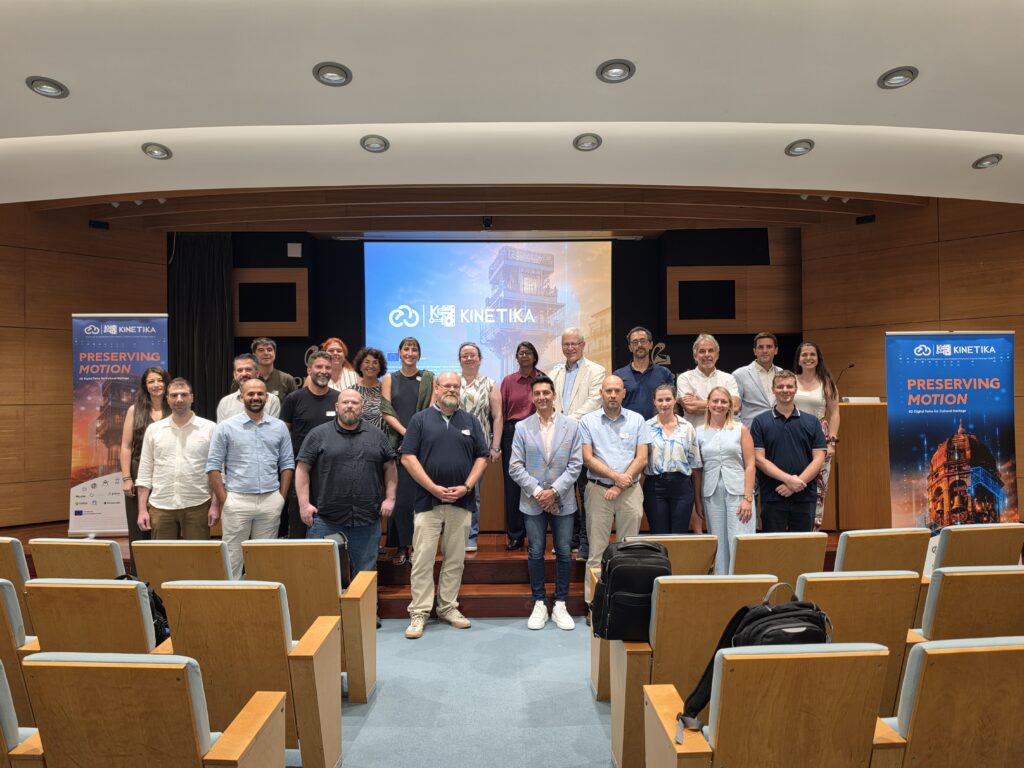
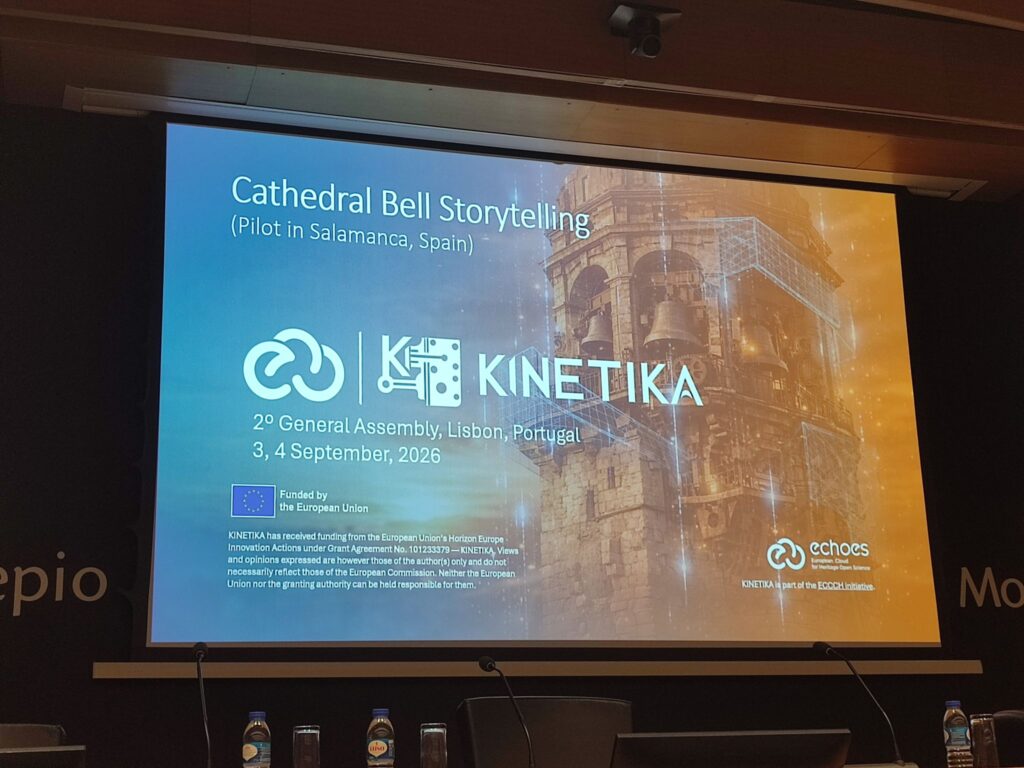
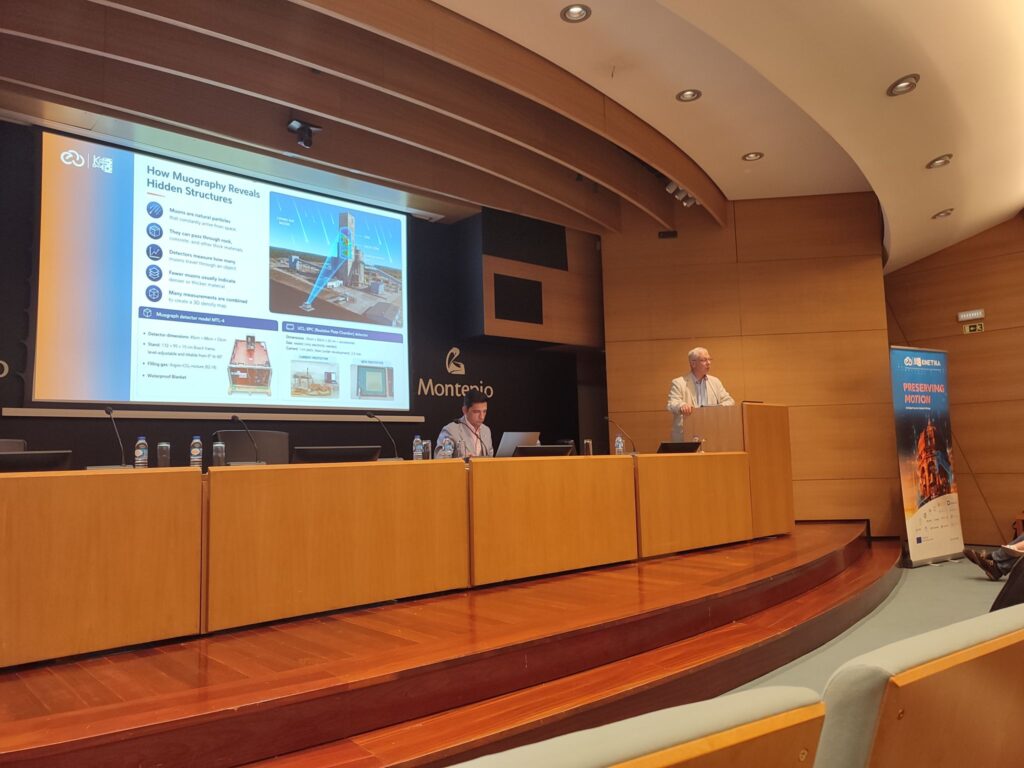
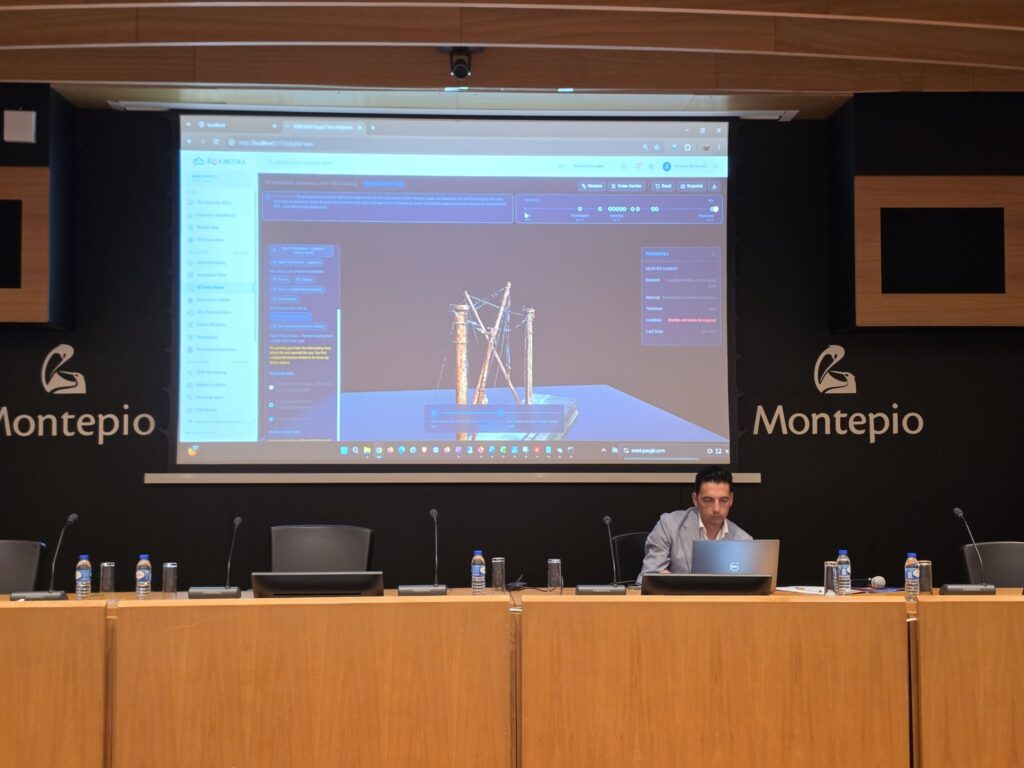
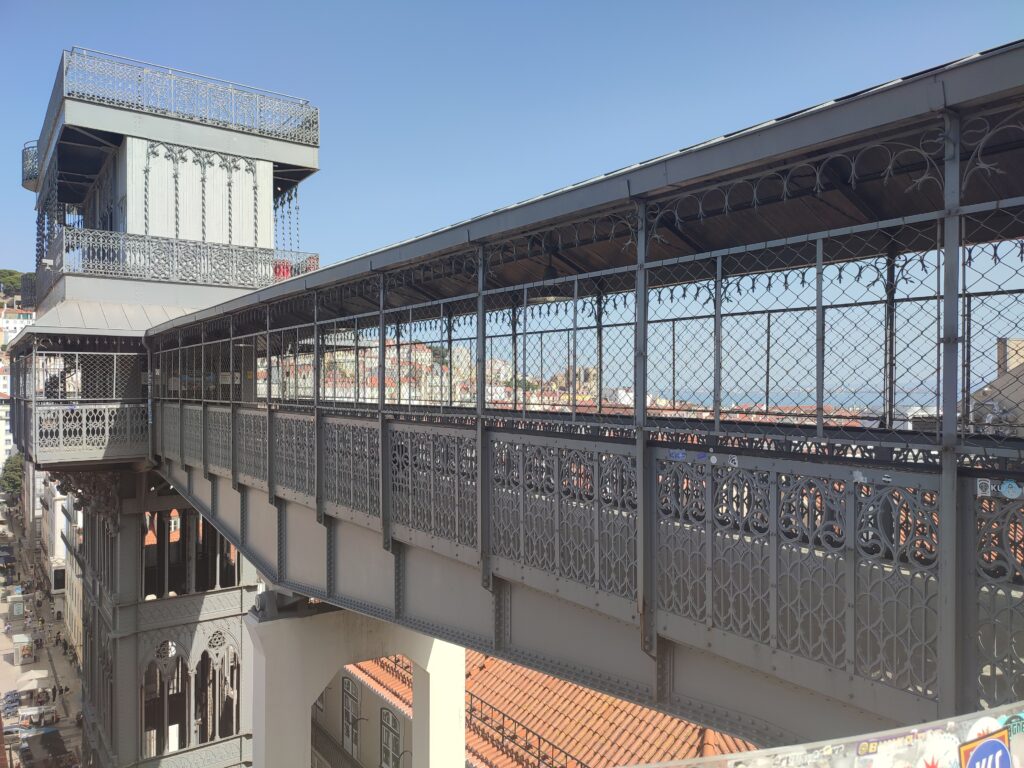
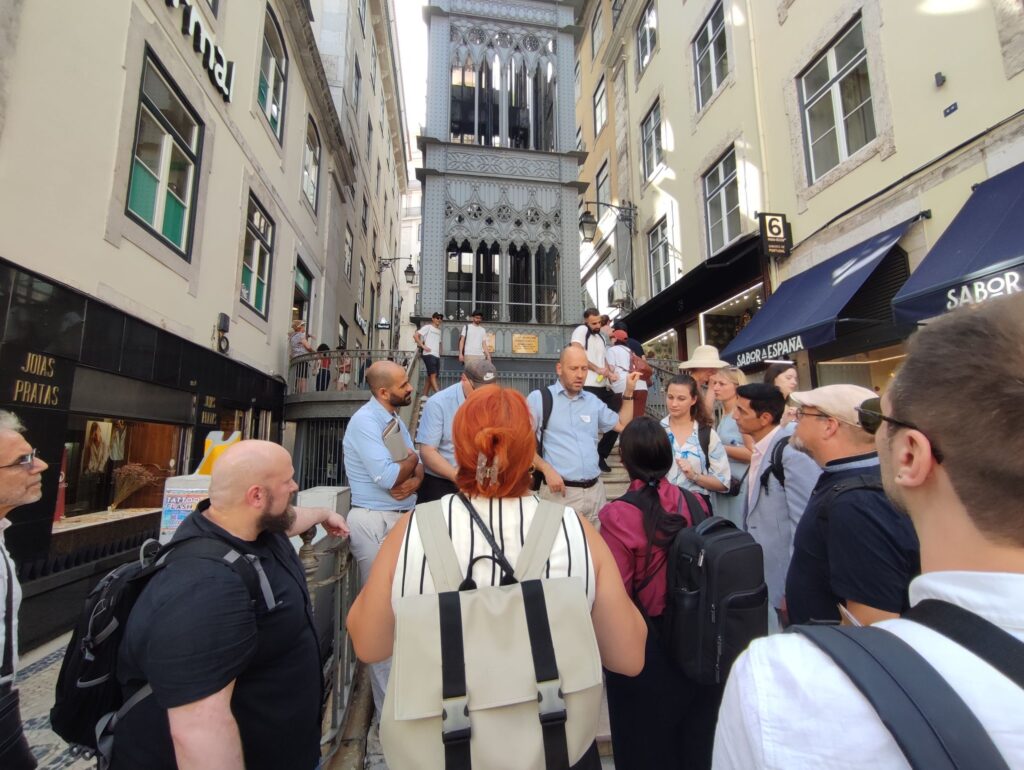
As captured by the experience of visiting the Lisbon pilot,
“The Santa Justa Elevator is not just a static iron structure; it is a fully operational piece of moving heritage” — continuously connecting the lower downtown streets to the higher city, blending a century of engineering with the daily rhythm of Lisbon.”
The same idea extends across the KINETIKA pilots: cultural heritage is not only made of structures and mechanisms, but also of the people who built, operated and experienced them, the practices that gave them purpose, and the communities whose histories developed around them. The ambition is therefore not simply to document heritage digitally, but to connect its physical condition with its function, evolution, knowledge and memory.
This connection between technology and real heritage became especially tangible during the field visits to the Santa Justa Elevator, KINETIKA’s Portuguese pilot. Consortium members were able to relate the technical discussions directly to a working historic structure, its mechanical systems, conservation needs and operational context. The visits helped ground the next stages of data collection, monitoring and technical integration in the reality of the heritage asset itself.
The Lisbon General Assembly therefore marked another step towards bringing KINETIKA’s technologies, pilot sites and heritage narratives together — supporting a Digital Twin approach that aims to preserve not only the physical state of dynamic cultural heritage, but also the knowledge, use and memory embedded within it.
Press release: Click here
Project website: https://kinetika-eccch.eu/
Press contact: kinetika.heu@usal.es
About KINETIKA
KINETIKA is a Horizon Europe project coordinated by the University of Salamanca. It develops a 4D digital twin framework for cultural heritage objects and sites with mechanical parts by integrating advanced imaging, IoT-based monitoring, and AI-driven analytics to support diagnosis, risk assessment, and conservation planning—while enabling data reuse by the wider cultural heritage community.
The KINETIKA consortium brings together 18 partners from 11 countries: Spain, Finland, the Netherlands, Estonia, Cyprus, Austria, Belgium, Greece, Serbia, Norway and Portugal. Its approach is validated through five pilot cases in Spain, Greece, Portugal, Austria and Finland.
Consortium Partners
- University of Salamanca (USAL) — Spain
- Muon Solutions Oy (MUONS) — Finland
- University of Oulu (UOULU) — Finland
- Waag Society Foundation / Stichting Waag Society (Waag Society) — Netherlands
- Institute of Entrepreneurship Development Estonia OÜ (IED ES) — Estonia
- Acceligence Ltd (ACCELI) — Cyprus
- Johanniter Österreich Ausbildung und Forschung gemeinnützige GmbH (JOAFG) — Austria
- UCLouvain (Université catholique de Louvain) — Belgium
- Technical University of Crete (TUC) — Greece
- University of Novi Sad – Faculty of Technical Sciences (FTN) — Serbia
- Jotne Connect AS (Jotne) — Norway
- University of Belgrade – Faculty of Mechanical Engineering (UBFME) — Serbia
- EnviTerra (ENVITERRA) — Greece
- Particle Summary (PARTICLE) — Portugal
- Municipality of Naxos and Small Cyclades (NAXOS) — Greece
- Carris — Companhia Carris de Ferro de Lisboa, E.M., S.A. (CARRIS) — Portugal
- Lisbon City Council — Câmara Municipal de Lisboa (CML) — Portugal
- UBITECH Limited (UBITECH) — Cyprus